
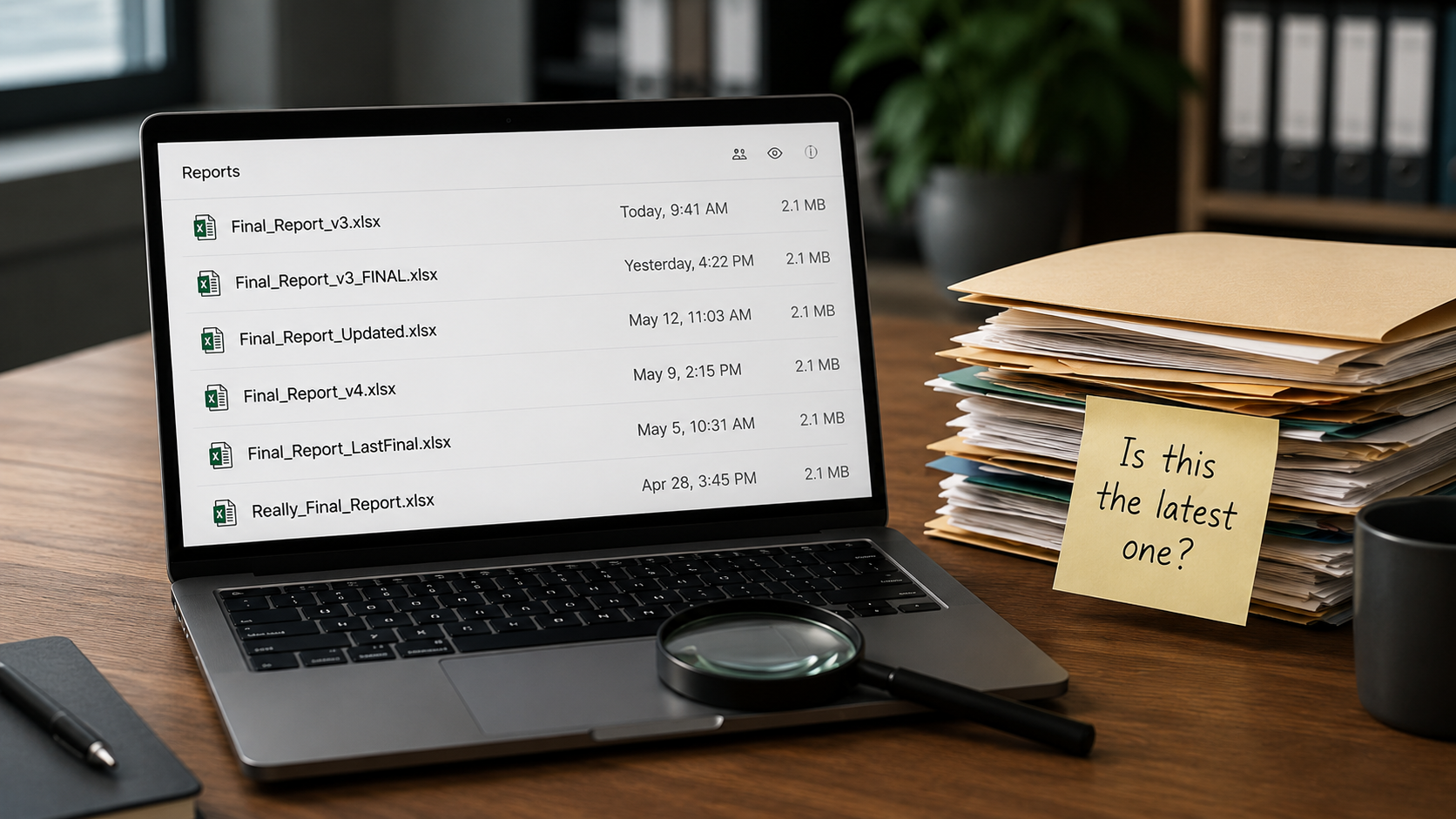
“I Know It’s Here Somewhere”
It sounds harmless.
It is a familiar phrase during a leadership meeting. Someone searches through folders, messages, dashboards, spreadsheets, and project platforms, trying to locate the latest version of a report.
A few minutes pass. Then someone asks:
“Is this the updated file?”
Suddenly, the meeting is no longer about making a decision. It is about finding information.
This is one of the clearest signs of an organization struggling with reporting chaos.
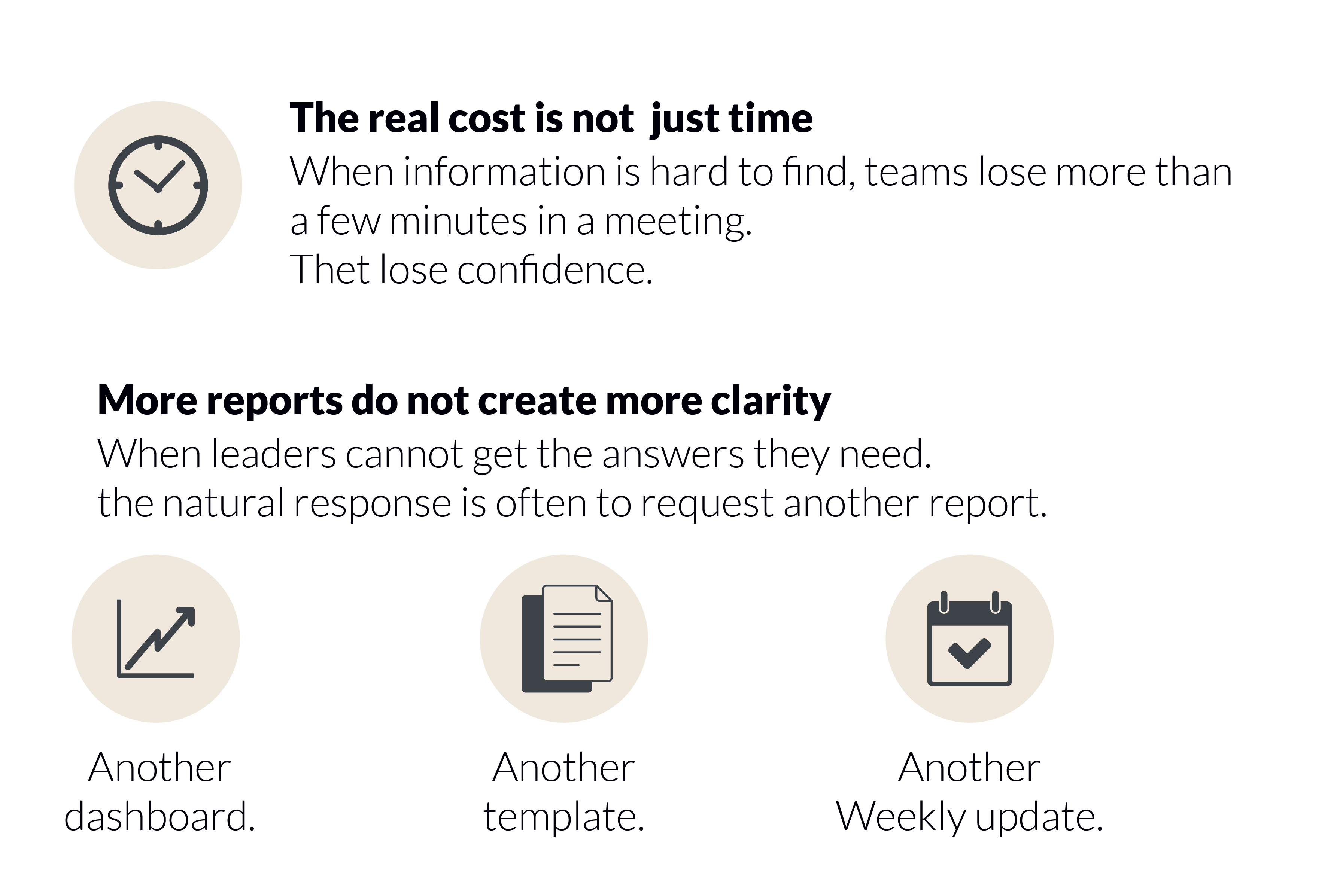
Leaders start questioning whether the numbers are accurate. Project managers spend hours reconciling updates. Finance teams validate figures that should already align. Operations teams recreate reports manually because there is no single source of truth.
But more reporting does not solve a system problem.
It usually makes the problem worse.
Each new report adds another versions of truth. Teams spend more time formatting information, reviewing inconsistencies and maintaning documentation that may not influence a single decision.

A standardized report doesn't ensure a standardized process.
Two teams might use the same template, complete identical fields, and meet the same deadline. However, behind the scenes, their processes may look completely different.

The final report may look consistent.
The process producing it is not.
That difference matters.
Leaders need to understand what is happening, where risk is growing, what requires attention, and which decision should be made next.
“I know it’s here somewhere” is not just a frustrating moment.
It is a warning sign.
It means critical information is not accessible when decisions need to be made.
It means the organization is relying on individual memory instead of a repeatable structure.
It means visibility depends on who is in the room, who remembers where the information is stored, and who has enough time to find it.
Operational maturity begins when information no longer depends on individual memory.
Teams need a repeatable reporting structure that defines where information comes from, how it is validated, who owns it, and when it is updated.
The goal is not to produce more reports. It is to create reliable, decision-ready visibility.
When leaders trust the information in front of them, meetings stop being about locating and validating data. They become conversations about risk, priorities, and action.
The question is not whether the information exists.
The question is whether people can trust it when a decision needs to be made...


.png)


